Cranberry
Keywords: American cranberry, bog cranberry, urinary tract infection, dental plaque
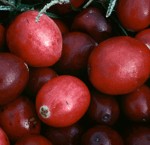 Cranberry Cranberry
© Steven Foster
Introduction
This fact sheet provides basic information about cranberry—common names, uses, potential side
effects, and resources for more information. Cranberries are the fruit of a native plant of North
America. These red berries are used in foods and in herbal products.
Common Names—cranberry, American cranberry, bog cranberry
Latin Name—Vaccinium macrocarpon
What It Is Used For
- Historically, cranberry fruits and leaves were used for a variety of problems, such as wounds, urinary
disorders, diarrhea, diabetes, stomach ailments, and liver problems.
- Recently, cranberry products have been used in the hope of preventing or treating urinary tract
infections or Helicobacter pylori infections that can lead to stomach ulcers, or to prevent dental
plaque. Cranberry has also been reported to have antioxidant and anticancer activity.
How It Is Used
The berries are used to produce beverages and many other food products, as well as dietary supplements in the form
of extracts, teas, and capsules or tablets.
What the Science Says
- Some studies testing cranberry products for their ability to prevent urinary tract infections have shown
promise. These studies have generally been small in size, and some were not randomized or controlled;
therefore, the results are not conclusive.
- Cranberry products have not been adequately tested to see if they can be used to help treat an existing
urinary tract infection.
- Research shows that components found in cranberry may prevent bacteria, such as E. coli, from clinging to
the cells along the walls of the urinary tract and causing infection. However, the mechanism of action of
cranberry is not fully understood.
- NCCAM, the National Institute of Diabetes and Digestive and Kidney Diseases, and the National Institute for
Dental and Craniofacial Research are funding studies to understand whether and how cranberry might work
to:
- Prevent urinary tract infection
- Prevent the formation of dental plaque
Side Effects and Cautions
- Eating cranberry products in food appears to be safe, but drinking excessive amounts of juice could cause
gastrointestinal upset or diarrhea.
- People who think they have a urinary tract infection should see a health care provider for proper diagnosis
and treatment. Cranberry products should not be used to treat infection.
- Tell your health care providers about any complementary and alternative practices you use. Give them a full
picture of what you do to manage your health. This will help ensure coordinated and safe care.
Sources
- Cranberry (Vaccinium macrocarpon) Aiton. In: Coates P,
Blackman M, Cragg G, et al., eds. Encyclopedia of Dietary
Supplements. New York, NY: Marcel Dekker; 2005:143–149.
- Cranberry. Natural Medicines Comprehensive
Database Web site. Accessed on July 2, 2007.
- Cranberry (Vaccinium macrocarpon). Natural Standard
Database Web site. Accessed on June 28, 2007.
|